
 Louis Harris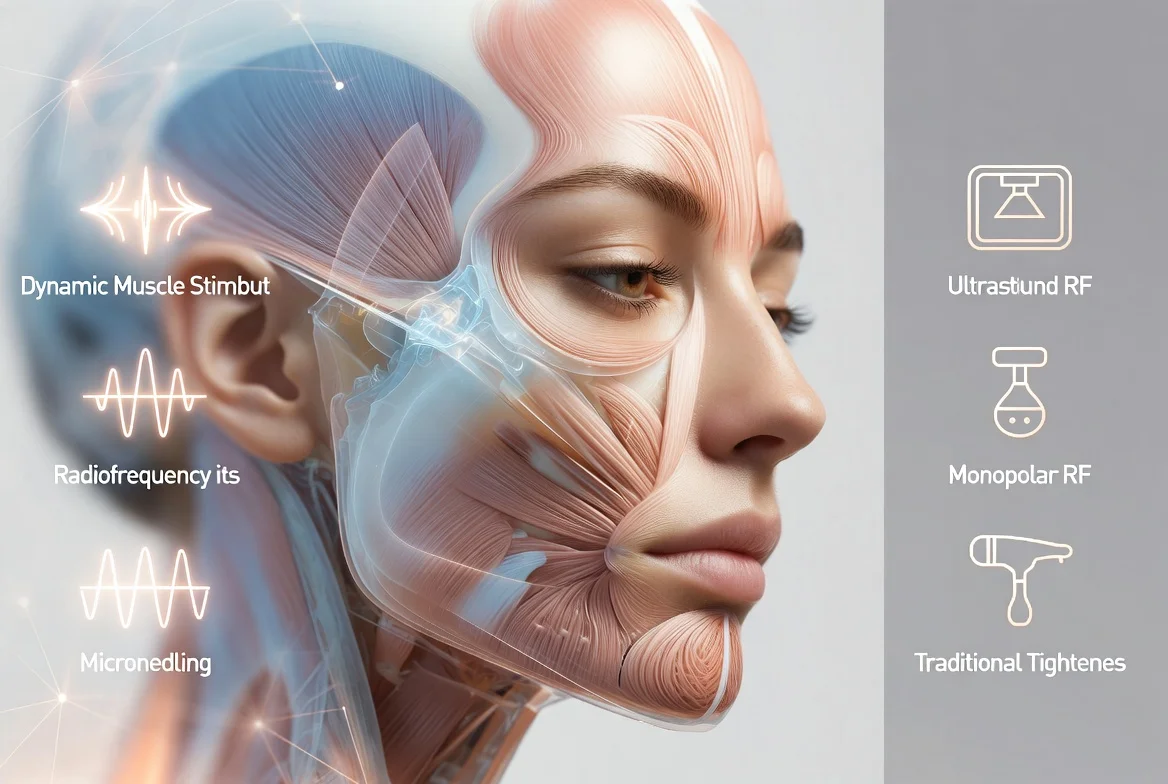
Many people today want a firmer face without surgery. Faces change as we get older, and more patients and doctors look for safe ways to help the skin and muscles look better. This trilift vs other facial tightening devices clinical comparison gives a clear look at what studies show. It helps people see the real differences so they can talk with their doctor and choose what fits them best.
Faces do not just get soft on the outside. The muscles under the skin also grow weaker over time. That is why some treatments focus on more than just the top layer of skin. This article shares the clinical data and everyday results in simple terms so everyone can follow along.
Understanding Facial Aging Beyond Skin Laxity
When a face ages, three main things happen. First, the muscles under the skin get weaker and thinner. Second, the middle layer of skin, called the dermis, gets thinner and loses some of its stretch. Third, the soft padding under the skin slowly fades away. Most tightening tools only work on one or two of these layers. That means the face may look a bit tighter on the surface, but the deeper support stays soft.
Think of a tent. If the poles (the muscles) get weak, the cloth (the skin) sags even if you pull the cloth tight. A good treatment needs to help the poles as well as the cloth. When we look at different devices, we check how well they help all three layers, not just how smooth the outside feels.
What Makes TriLift Distinct in Mechanism
TriLift works in three ways at the same time. It uses Dynamic Muscle Stimulation to make the facial muscles work harder, just like a gentle workout. This helps the muscles grow a little stronger and thicker. At the same time, TriPollar radiofrequency warms the middle skin layer. The warm feeling helps the body make new collagen and elastin so the skin feels thicker and firmer. The third part is RF-assisted microneedling. Tiny needles carry the radiofrequency deeper and help the skin make more natural hyaluronic acid, which adds a soft, full look.
Because all three steps happen together, the muscles, the skin, and the volume get help in one visit. Single tools that only heat the skin or only work on the surface cannot do this full job. Studies on the combined radiofrequency and muscle activation show clearer skin firmness and fewer fine lines after a series of visits. The design aims for a natural lift that builds slowly and looks like the face itself, not a pulled or frozen look.

Overview of Leading Alternative Facial Tightening Devices
Other popular tools use different energy. High-intensity focused ultrasound, often called HIFU or Ultherapy, sends sound waves deep under the skin. The waves create small heat spots that make the body build new collagen. These tools reach the deep support layer and are known for lifting the brow or jaw a little bit.
Monopolar and bipolar radiofrequency systems, such as Thermage-style devices, send heat into the skin layers. The heat tightens collagen right away and keeps working for months as new collagen forms. RF microneedling platforms push tiny needles into the skin and add radiofrequency at the same time. This helps both the surface texture and the deeper firmness. Some other muscle-stimulation tools use gentle electrical pulses, but most of them work only on the muscles and leave the skin layers alone.
Each group has its own main energy source, depth, and goal. Ultrasound goes deepest, radiofrequency warms the middle layers, and pure muscle tools focus on the tissue under the skin. None of them yet match the three-part approach in one session the way TriLift does.
Direct Clinical Comparison of Outcomes
When we look at the published numbers, we see clear patterns. For muscle thickness, devices that use Dynamic Muscle Stimulation show measurable growth in facial muscles after a series of treatments. Ultrasound studies on similar electrical muscle work report about 10 to 18 percent thicker muscle in treated areas. Skin-only tools do not change muscle size at all.
Dermal density improves with radiofrequency and RF microneedling. Patients often gain thicker middle skin layers after several visits. Wrinkle scores drop for both TriLift-style treatments and pure radiofrequency tools. In one small study of radiofrequency plus muscle activation, doctor scores for skin tightness and wrinkles improved by more than two points on a standard scale and stayed better at the three-month check. Patient satisfaction scores are high across most devices when the right tool matches the main problem.
HIFU studies show small but real lifts measured in millimeters on the brow or jaw. RF microneedling often scores best for surface smoothness and pore size. TriLift results stand out when the goal is both muscle tone and skin firmness together. The data stay modest and honest. No device gives a surgical-size change, but the numbers show steady, visible help for mild to moderate aging.
Treatment Protocols, Session Requirements, and Longevity
TriLift usually needs three to six visits spaced one or two weeks apart. Each visit lasts about twenty to thirty minutes. Results start to show after the first few sessions and keep building for weeks. Maintenance visits every few months help keep the muscle tone and skin firmness.
HIFU often needs only one or two sessions a year because the deep heat lasts longer. Radiofrequency and RF microneedling usually ask for three to six visits, much like TriLift. Pure muscle tools may need more frequent visits to keep the tone. Results from all these tools last six to eighteen months for most people, depending on age, lifestyle, and how well the person follows the plan. The more sessions a person completes, the stronger the cumulative change in structure.
Safety Profiles, Downtime, and Patient Experience
Most people feel only mild warmth or a soft tingling during TriLift. Pain scores stay very low, often under one on a ten-point scale. There is almost no downtime. Skin may look a little pink for a few hours, then return to normal. The treatment works on all common skin colors and types when done carefully.
HIFU can feel more intense and sometimes needs numbing cream. RF microneedling may leave mild redness for a day or two. Monopolar radiofrequency is usually comfortable but can feel hot. Serious side effects are rare for all these tools when used by trained hands. People with metal implants, pacemakers, or certain skin conditions should talk with their doctor first. TriLift stands out for comfort and the ability to go back to normal life right away.
Matching Device to Patient Aging Pattern
The best choice depends on what shows most on the face. If the main issue is weak, soft muscles and a tired look, a tool that works the muscles first makes sense. If the skin feels thin and loose but the muscles still feel strong, pure radiofrequency or HIFU may be enough. When volume loss and fine lines dominate, RF microneedling or the full three-part approach can help fill and smooth at the same time.
Doctors look at photos, feel the skin, and sometimes use ultrasound to measure muscle size. This careful check moves past the simple word “tightening” and matches the real needs of each face. Patients who understand their own pattern can ask better questions and feel happier with the plan.
Cost Considerations and Value Over Time
A full series of TriLift visits often costs between a few thousand and seven thousand dollars, depending on the clinic and number of sessions. HIFU single visits can cost more per session but may need fewer total visits. RF packages sit in a similar range. The real value comes from how long the results last and how many layers improve.
A treatment that helps muscle, skin, and volume may save money over years because fewer extra tools are needed later. Maintenance costs stay lower when the base structure stays stronger. Patients should ask for clear package prices and expected upkeep so they can plan without surprises.

Key Limitations in the Current Evidence Base
The studies we have are useful but not perfect. Many are small and open-label, meaning both the doctor and patient know which tool was used. Follow-up times vary from one month to one year. Different tools use different scoring systems, so exact side-by-side numbers are hard to find. Large head-to-head trials that put TriLift next to HIFU or RF microneedling in the same patients are still rare. Readers should keep these gaps in mind and treat the numbers as helpful guides, not final proof.
FAQ
How soon will I see changes after the first TriLift visit? Many people notice a small lift right away from the muscle work. The skin firmness keeps growing for weeks as new collagen forms.
Can these treatments replace a surgical facelift? No. They give mild to moderate help for early changes. Surgery still works best for heavy sagging.
Is TriLift safe for darker skin tones? Yes. The radiofrequency and muscle steps are gentle and do not rely on light energy that can darken skin.
How does muscle stimulation feel? It feels like a soft pulsing or gentle massage under the skin. Most people say it is comfortable.
Will the results look natural? Yes. Because the muscles and skin change slowly together, the face keeps its own shape and expression.
Do I need to stop other skin care? No. You can keep using gentle creams and sunscreen. Your provider will tell you if any product needs a short pause.
What happens if I stop maintenance visits? The muscle tone and skin firmness slowly return toward the starting point over many months. Regular light visits help hold the gains.
Can men use these devices too? Yes. The same tools work well for male faces. Settings can be adjusted for thicker skin or stronger muscles.
Conclusion and Practical Takeaways
The trilift vs other facial tightening devices clinical comparison shows that no single tool is best for every face. TriLift stands out when muscle weakness, thin skin, and volume loss all need help at once. Ultrasound and pure radiofrequency shine for deep lift or surface firmness alone. The smartest step is to match the tool to the layers that need the most care.
Talk with a trained provider who can examine your face and share clear before-and-after photos from real patients. Ask about the exact protocol, expected timeline, and total cost. When the choice fits your own aging pattern, the results feel natural and the process stays easy. You can feel good knowing you chose based on evidence and your own needs.
Disclaimer:
This article is for general information only and is not medical advice, diagnosis, or a treatment recommendation. Individual results from any facial tightening device can vary based on age, skin type, lifestyle, and other personal factors. Always talk with a qualified doctor or licensed provider before choosing any procedure, and never rely on online content alone for health or beauty decisions.


 IQnews wire