
 Louis Harris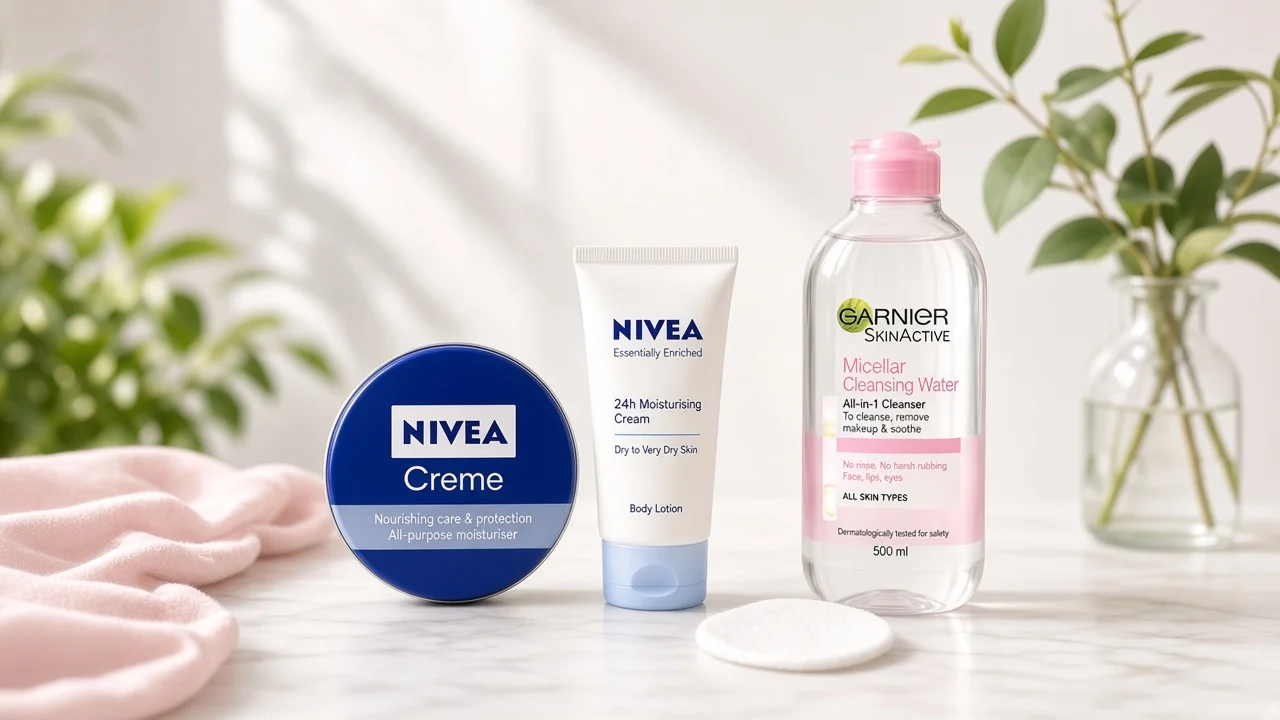
If you are a skincare beginner, Nivea is a good starting brand because it keeps formulas simple, affordable, and gentle. Garnier is also a strong choice, but it leans a bit more into active ingredients like vitamin C and salicylic acid. Both brands are easy to find in most drugstores, so you do not need a big budget or a long routine to get going. This guide compares them side by side, so you can pick the one that fits your skin and your goals.
Starting a skincare routine can feel confusing, since there are hundreds of products, long ingredient lists, and a lot of conflicting advice online. Nivea and Garnier are two of the most trusted beginner brands because they are affordable, widely available, and easy to understand. Below, we break down what each brand actually offers, so you can choose with confidence instead of guessing.
What Is Nivea, and What Makes It Good for Beginners?

Nivea is a German skincare brand known for simple, moisture-focused products built around a small set of core ingredients. The brand has been making skincare since the early 1900s, and its most famous product, Nivea Creme, still uses a similar approach today. That approach centers on a special emollient that helps oil and water blend smoothly, which keeps many Nivea formulas gentle and predictable. This matters a lot when your skin has never tried active ingredients before, since a calmer formula gives you fewer surprises.
Nivea’s newer lines also include ingredients that beginners often recognize from more advanced routines, such as niacinamide to even out skin tone, salicylic acid to help unclog pores, and hyaluronic acid to add hydration. Some products even include retinol to support skin renewal. Because of this range, you can start with a plain moisturizer and later move into a Nivea product with one active ingredient, all without switching brands.
For a true beginner, that flexibility is the real advantage. You are not choosing between “basic” and “advanced” skincare, but simply deciding how many steps you want to add at once.
What Is Garnier, and What Makes It Good for Beginners?
Garnier is a French skincare brand best known for its SkinActive line, which centers on micellar water as a first cleansing step. Micellar water is a no-rinse cleanser that uses tiny particles, called micelles, to lift dirt, oil, and makeup off the skin without any scrubbing. This makes it especially beginner-friendly, since the classic Micellar Cleansing Water has no added parabens, fragrance, sulfates, or silicones, and it works simply by wiping a soaked cotton pad across your skin.
Garnier also offers versions built for specific starting concerns, so you can match one product to one problem instead of guessing. For oily or acne-prone skin, there is a version with salicylic acid that helps mattify skin and minimize the look of pores. For dull skin, there is a version with vitamin C that helps brighten and refresh your complexion. Because each product targets a clear concern, beginners can skip the trial and error that often comes with building a routine from scratch.
Nivea vs Garnier: Side-by-Side Comparison for Beginners
Here is how the two brands compare on the things that matter most when you are just starting out.
| Category | Nivea | Garnier |
|---|---|---|
| Best known for | Moisturizers and creams | Micellar water and cleansers |
| Typical price range | Budget-friendly, similar to Garnier | Budget-friendly, similar to Nivea |
| Formula style | Simple and moisture-focused, with some actives | Cleansing-focused, with actives like salicylic acid and vitamin C |
| Best first product | A basic moisturizer or cream | Micellar Cleansing Water |
| Good for oily or acne-prone skin | Yes, with niacinamide or salicylic acid options | Yes, with the salicylic acid micellar water |
| Good for dry or sensitive skin | Yes, cream formulas are rich and simple | Yes, the fragrance-free micellar water is gentle |
| Ease of building a routine | Easy, since one product often does several jobs | Easy, though you will likely add a moisturizer separately |
Neither brand is better overall, because they solve slightly different problems. Nivea tends to focus on hydration in one simple step, while Garnier tends to focus on cleansing and prepping the skin before anything else goes on.
Which Brand Should a True Beginner Start With?
A true beginner should start with whichever brand solves their most urgent skin problem first, since that is the habit most likely to stick. If your biggest issue is dry, tight, or flaky skin, a simple Nivea moisturizer is a strong first step. If your biggest issue is makeup buildup or dull-looking skin, Garnier’s micellar water is the easier place to begin.
Many people do not actually have to choose just one brand. A common and beginner-friendly combination is Garnier micellar water for cleansing, followed by a Nivea moisturizer for hydration. This pairs each brand’s strongest category with the other, without adding extra products or complicated steps.
How Do You Build a Simple Routine With Either Brand?
A simple beginner routine only needs three steps: cleanse, moisturize, and protect with sunscreen during the day. You do not need serums, toners, or exfoliants right away, since adding too many products at once makes it harder to tell what is actually working.
- Morning: Cleanse with a gentle cleanser or micellar water, apply a light moisturizer, then finish with sunscreen.
- Evening: Cleanse again to remove the day’s dirt and any makeup, then apply a slightly richer moisturizer if your skin feels dry.
- Weekly (optional): Once your basic routine feels comfortable, add one active ingredient product, such as a salicylic acid cleanser for breakouts.
This structure works whether you build it entirely from Nivea, entirely from Garnier, or a mix of both.
What Ingredients Should a Beginner Watch Out For?

A beginner should pay close attention to fragrance, alcohol content, and active ingredient strength, since these are the most common causes of irritation when starting out. Fragrance in particular is one of the most frequent triggers of sensitivity in new skincare users, which is why fragrance-free options, like Garnier’s classic micellar water, are often a safer first choice. Strong actives, such as retinol or high concentrations of exfoliating acids, are best introduced slowly and one at a time, rather than combined all at once.
If you have known allergies or very reactive skin, a simple patch test can save you a lot of trouble. Just apply a small amount of the product to your inner arm for a day or two before trying it on your face, so you can catch any reaction early.
Are Nivea and Garnier Cruelty-Free?
Garnier states that all of its products are approved by Cruelty Free International under the Leaping Bunny Program, and the brand also says that 99% of the ingredients in its products are vegan and not derived from animals. Nivea’s cruelty-free status varies by product line and region, so it is worth checking the specific product page before you buy if this matters to you. Since animal-testing rules differ by country, neither brand’s policy should be assumed to be identical everywhere.
Nivea vs Garnier: Final Verdict for Skincare Beginners
For most skincare beginners, the honest answer is that both Nivea and Garnier are good starting brands, and the better choice really comes down to your main skin concern. Choose Nivea if hydration and a simple, low-step routine matter most to you. Choose Garnier if cleansing, makeup removal, or a specific concern like oiliness is your priority. Many beginners end up using both, since the two brands complement each other rather than compete directly.
Frequently Asked Questions
Is Nivea good for beginners with sensitive skin?
Yes, Nivea’s core cream formulas are simple and light on fragrance compared to many trend-driven brands. Still, it is worth patch-testing any new product first, since sensitive skin can react even to gentle ingredients.
Is Garnier micellar water enough to clean your face?
For most people, yes, since it lifts away dirt, oil, and makeup without any rinsing needed. If you wear heavy or waterproof makeup, following it with a second gentle cleanser gives you a more thorough clean.
Can beginners use Nivea and Garnier together?
Yes, many beginners use Garnier to cleanse and Nivea to moisturize, since the two brands focus on different steps in a routine. There is no ingredient conflict in doing this, as long as neither product irritates your skin.
Which brand is cheaper, Nivea or Garnier?
Both brands are priced similarly and sit in the budget to mid-range category at most drugstores. Exact prices vary by product, size, and region, so it is worth comparing specific items rather than the brands as a whole.
Do Nivea or Garnier products contain retinol?
Nivea offers some products formulated with retinol to support skin renewal, while Garnier’s core SkinActive line leans more toward cleansing and vitamin C. Even so, formulas can vary from product to product within each brand.
Is Garnier good for acne-prone skin?
Yes, Garnier’s Micellar Cleansing Water with salicylic acid is made specifically for oily and acne-prone skin. It helps minimize the look of pores and mattify skin as part of one simple daily step.
Should a beginner start with a full routine or just one product?
A beginner should start with just one or two products, such as a cleanser and a moisturizer, before adding anything else. Bringing in sunscreen next, and one active ingredient later, makes it much easier to track what your skin actually likes.
Starting a skincare routine does not have to be complicated or expensive. Both Nivea and Garnier give beginners an honest, low-risk way to build good habits, one simple product at a time. Pay attention to how your skin responds, adjust slowly, and remember that the best routine is the one you will actually stick with.
Disclaimer: This article reflects publicly available product information at the time of writing. Skincare formulas, pricing, and ingredient lists can change, so always check the current packaging or official brand website before buying, and consult a dermatologist if you have persistent skin concerns.


 IQnews wire


