
 Louis Harris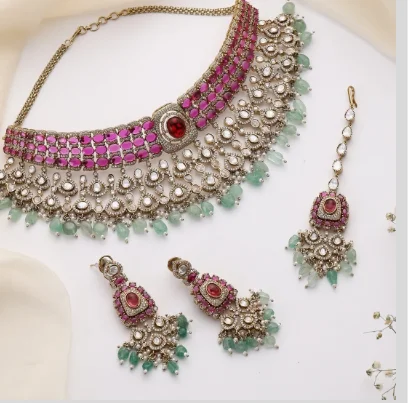
You buy a stunning piece, wear it twice, and then the color fades. The shine dulls. Suddenly that necklace you loved looks tired and cheap. Anyone who shops for Indian costume jewelry knows this quiet frustration. The good news is that most of it comes down to a few things you can check before you buy, and a few habits after. Once you understand what separates a piece that lasts from one that turns your skin green, you stop wasting money on regrets.
Here is the part most sellers won’t tell you. Indian costume jewelry ranges wildly in quality, and the price tag alone won’t tell you which is which. Two necklaces can look identical online. One holds up for years. The other flakes by the second wear. Let’s break down what actually matters so you can spot the difference and shop with more confidence.
Understanding the Base Metal Underneath
Every piece starts with a base metal, and this hidden layer decides a lot. Most quality imitation jewelry uses brass as its foundation. Brass holds plating well and resists bending, which matters for pieces you wear often.
Cheaper items sometimes use mixed alloys that react with your skin or snap under light pressure. You can’t always see the base metal, but you can ask. A seller who names the material usually has nothing to hide.
Brass sits at a nice middle point. It feels solid in your hand, takes a good polish, and lasts through regular wear. That weight you feel when you pick up a piece? Often a small sign of decent construction.
Decoding the Plating That Gives That Shine
Plating is the thin layer of gold- or silver-tone that sits over the brass. This is where that rich finish comes from, and also where most disappointment starts.
Thin plating wears off fast. You’ll see it first at the edges, where your skin rubs most. Thicker plating stays put much longer, though it usually costs a little more.
Here is why plating matters so much:
- It gives the piece its color and glow.
- It protects the base metal from tarnish.
- It decides how the item ages over months of wear.
Gold plating and silver plating each suit different looks. Gold tones warm up festive outfits. Silver works nicely with cooler colors and modern styles. Neither is better, really. It depends on your wardrobe and what pulls you.
Knowing Your Stones Before You Buy
Stones change the whole character of a piece. Indian costume jewelry uses several types, and each one behaves differently over time.
Cubic zirconia, often called CZ or American diamond, mimics the sparkle of real diamonds at a fraction of the cost. It catches light beautifully and stays clear if you keep it clean. Kundan uses glass set in gold-toned frames, a technique with deep roots in Rajasthan and Gujarat. Kemp stones bring that rich red and green temple look, popular in South Indian styles. Onyx adds a bold, dark contrast that reads modern and striking.
Each stone asks for slightly different care. CZ shows smudges quickly, so it needs regular wiping. Kundan settings can loosen if handled roughly. Knowing what you’re buying helps you treat it right from day one.
Caring for Your Pieces So They Last
This is where most people slip up. You spend on lovely jewelry, then toss it in a drawer and expect it to survive. It won’t. Costume jewelry needs a little attention, and honestly, it’s not much.
Follow these habits and your pieces will thank you:
- Put jewelry on last, after perfume, lotion, and hairspray.
- Wipe each piece with a soft dry cloth after wearing.
- Store items separately so they don’t scratch each other.
- Keep everything away from water, including washing hands.
- Avoid humid spots like bathrooms for long-term storage.
Moisture is the real enemy here. It speeds up tarnish and loosens glued stones. A small pouch or a lined box works well. Some people add silica gel packets to keep things dry, which perhaps sounds fussy but genuinely helps.
One thing worth repeating. Perfume and sweat do more damage than anything else. The chemicals eat at plating over time. Putting your jewelry on last is maybe the single easiest habit that extends its life.
Matching Quality to How You’ll Wear It
Not every piece needs to last a decade. Think about how often you’ll actually wear something before you decide how much to spend.
For a one-time event, lighter pieces make sense. For jewelry you’ll pull out again and again, spend a bit more on better plating and solid construction. That math usually works out cheaper in the long run, since you replace less.
A festive set worn once a year has different demands than everyday studs. Buy for the wear, not just the look. It’s a small shift in thinking that saves money and disappointment both.
Indian costume jewelry gives you the beauty of fine jewelry without the fear of loss or the high cost. Treat it with a little care, ask the right questions before you buy, and these pieces will hold their shine through many occasions. Start with one piece you love, learn how it wears, and build your collection from there. That slow, considered approach tends to serve you better than grabbing everything at once.


 umhaqa
 Apex
Apex


