
 Louis Harris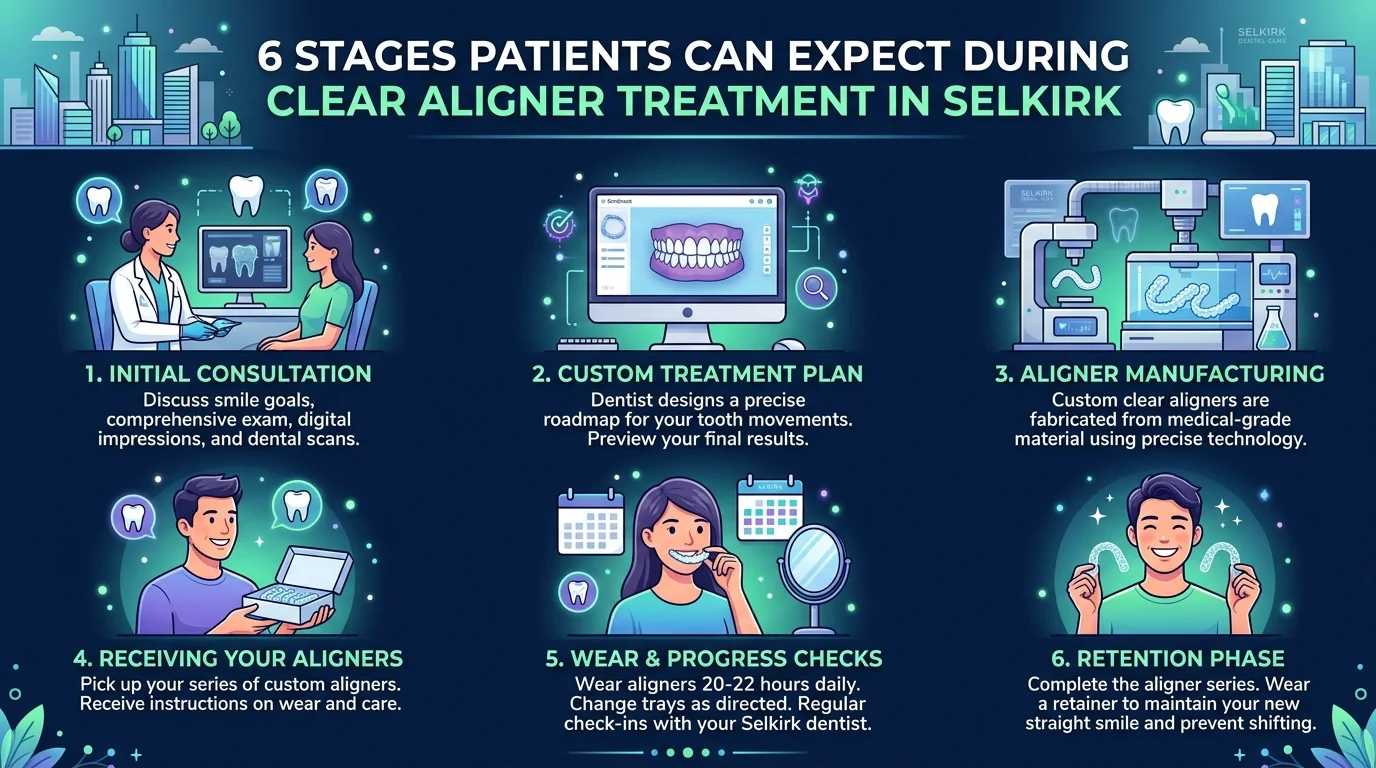
Clear aligners move teeth through a planned series of small positional changes rather than one major adjustment. Each tray follows a treatment sequence created around tooth alignment, bite condition, and the amount of movement required. Regular dental supervision in Selkirk helps confirm that teeth continue to move according to that plan.
Patients considering Invisalign selkirk usually begin with an assessment before receiving any custom aligners. Treatment can differ between mild crowding, gaps, tooth rotation, and more involved bite concerns. The six stages below show how clear aligner care progresses from the first examination to long-term retention.
1. Dental Assessment Confirms Suitability
The first stage starts with a dental examination that evaluates teeth, gums, bite, and general oral health. A dentist checks the type and degree of misalignment before recommending clear aligner treatment. Mild cases may involve small gaps, slight crowding, or minor tooth rotation. More involved cases can include noticeable crowding, multiple rotated teeth, or certain bite concerns.
2. Dental Records Guide the Treatment Plan in Selkirk
Detailed dental records provide the information required to plan controlled tooth movement throughout treatment. Depending on the clinical approach, these records can include dental images, X-rays, impressions, or digital scans. The collected information allows the dentist to examine tooth positions and relationships between the upper and lower arches. A customised plan then maps how teeth should move throughout successive stages of treatment.
Factors That Shape the Treatment Plan
Several clinical details can influence how the dentist develops the clear aligner sequence:
- Degree of crowding: Limited space may require carefully staged movements across several teeth.
- Tooth rotation: Rotated teeth can require additional control as they move toward planned positions.
- Bite condition: Upper and lower tooth relationships influence the order and direction of movement.
- Required movement: Greater positional changes can require additional aligners and a longer treatment period.
- Oral health: Healthy gums and supporting structures remain important throughout orthodontic care.
3. Custom Aligners Begin Tooth Movement
Once the treatment plan is ready, a custom series of clear trays is produced for the patient. Patients in Selkirk wear the trays according to the schedule provided by their dental professional. Aligners are removable, which allows normal brushing, flossing, and meals without trays in place. Consistent daily wear matters because extended time without aligners can interfere with planned tooth movement.
4. New Aligner Sets Continue Progress
Patients move to new aligner sets according to the schedule established within their individual treatment plans. Some treatment protocols change aligners approximately every one or two weeks, although individual instructions can differ. A newly fitted tray may initially feel snug because it applies pressure toward the next planned position. Consistent wear helps teeth follow the sequence instead of shifting back toward earlier positions.
5. Progress Checks Keep Treatment on Track
Periodic dental appointments allow the dentist to compare actual tooth movement with the original treatment plan. These visits provide an opportunity to examine aligner fit, oral health, bite changes, and treatment progress. A dentist can identify areas that require additional attention before they interfere with later stages. Some cases may also use tooth-coloured attachments to provide additional control for particular movements.
6. Retainers Help Preserve Final Alignment
Active aligner treatment ends once teeth reach the positions established in the completed treatment plan. However, teeth can naturally shift after orthodontic movement if their new positions receive no support. A retainer helps maintain alignment while surrounding tissues adjust to the corrected tooth positions. Professional follow-up also allows the dentist to monitor alignment after active treatment ends.
Clear aligner treatment follows a planned process that extends well beyond receiving the first set of trays. Assessment, treatment planning, controlled tooth movement, progress reviews, and retention each contribute to the final result. Dental clinics that provide Invisalign in selkirk can evaluate alignment needs and create a treatment sequence suited to each patient’s oral condition. Consistent aligner wear and professional follow-up can help support stable results after active treatment ends.


 Wild Rise
 IQnews wire


